
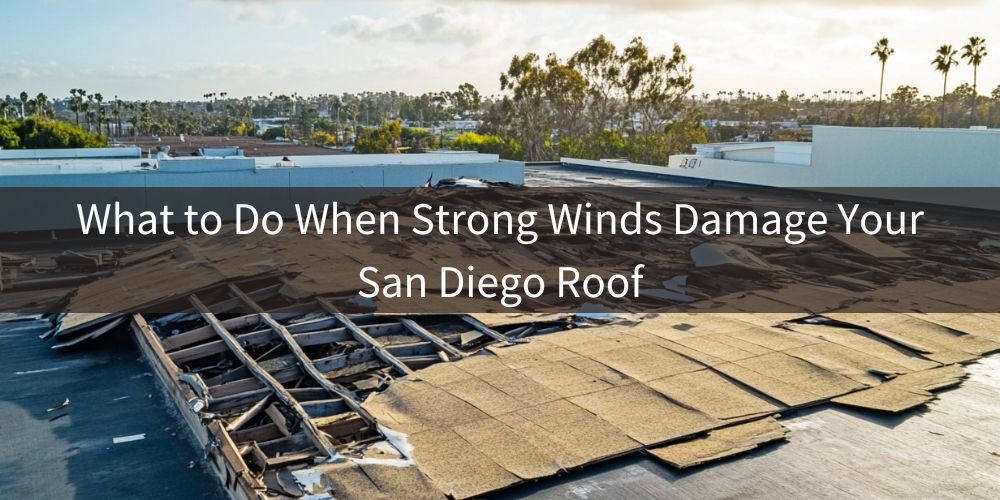
When strong winds damage your San Diego roof, it is crucial to immediately assess the extent of the damage and contact a local roofing professional to prevent further issues and ensure proper repairs suited for the region's specific weather conditions. San Diego’s coastal climate can intensify wind-related stress on commercial roofing systems, leading to uplifted membranes, displaced flashing, and compromised rooftop equipment. These issues often result in water intrusion and long-term structural concerns if not addressed promptly. Partnering with a commercial roofing specialist familiar with local weather patterns ensures hidden vulnerabilities are identified and repaired early, preserving the roof’s performance and extending its operational lifespan.
For San Diego commercial building owners and facility managers, understanding the immediate steps to take after wind damage is vital for minimizing repair costs and preventing operational disruptions. In this blog, we’ll dive into the essential actions and considerations to protect your commercial roof against wind damage, including expert insights on effective repairs and maintenance strategies tailored to San Diego's coastal environment.
How Can You Assess the Extent of Wind Damage to Your Commercial Roof?
Inspect the roof closely for signs of damage such as missing materials and structural damage. Evaluating wind damage requires a systematic approach, including a visual inspection both at ground level and on the roof itself. Professional assessments are crucial in ensuring that all damage is identified and addressed promptly.
The following is a guide to evaluate wind damage on a commercial roof effectively:
- Visual Inspection: Check for missing, loose, or damaged materials on the roof.
- Structural Integrity: Examine roof components like beams and trusses for bending or displacement.
- Interior Assessment: Look for leaks, water stains, or moisture signs inside the building.
- Professional Evaluation: Hire a roofing expert to conduct a thorough assessment and report.
- Document Findings: Capture photographic evidence and detailed notes of all observed damages.
1. Visual Inspection: Check for displaced, loose, or damaged components on the roof
A comprehensive visual inspection of a commercial roof involves a methodical walkthrough to detect visible signs of damage caused by wind, debris, or prolonged exposure. This includes examining membrane surfaces for punctures or bubbling, inspecting perimeter flashings for detachment, and verifying that mechanical units remain securely fastened to their curbs. Edge metal, coping, and sealants around penetrations like vents, skylights, and pipe boots should be carefully evaluated for movement or degradation. Pay close attention to high-stress areas such as corners and roof transitions, which often show early signs of failure. Because some damage may not be evident from ground level or to the untrained eye, inspections should be performed by experienced professionals or supplemented with aerial drone imaging for hard-to-access zones. Early detection of minor damage helps prevent water intrusion, structural compromise, and expensive emergency repairs.
2. Structural Integrity: Examine roof components like beams and trusses for bending or displacement
Assessing the structural integrity of a commercial roofing system goes beyond surface-level inspection. It involves evaluating the underlying support components—including steel beams, joists, decking, and trusses—for signs of distortion, sagging, or movement caused by high wind loads or excessive moisture. Structural shifts may result from storm-related uplift, impact from airborne debris, or water infiltration weakening load-bearing materials. Visual indicators such as uneven roof planes, cracks near bearing points, or separation at connection joints can signal more serious internal problems. In many cases, structural assessments require coordination with a structural engineer or licensed roofing contractor to ensure that the roof meets load-bearing and safety requirements post-storm. Identifying and reinforcing compromised areas early on preserves the roof’s stability and protects the building’s overall structural health.
3. Interior Assessment: Look for leaks, water stains, or moisture signs inside the building
An interior inspection is a crucial complement to external roof evaluations. Signs such as ceiling discoloration, bubbling paint, mildew odors, or damp insulation are often early warnings of water intrusion. These issues typically originate from breaches in the roofing membrane, failed flashing, clogged drains, or defective seals around rooftop units. Inspecting ceiling voids, mechanical rooms, and areas below roof penetrations can help pinpoint the origin of the leak. Moisture meters and infrared imaging may also be used to detect hidden dampness behind walls or above ceiling panels. By tracing moisture back to its entry point, contractors can make targeted roof repairs and prevent further deterioration of interior finishes, electrical systems, or insulation. Prompt response to interior warning signs not only limits repair costs but also helps maintain a healthy indoor environment for occupants.
4. Professional Evaluation: Hire a roofing expert to conduct a thorough assessment and report
A professional evaluation is a critical step in uncovering both visible and hidden damage that can impact the long-term performance of a commercial roofing system. Licensed commercial roofing specialists bring advanced diagnostic tools such as infrared scanners, core sampling equipment, and moisture detection devices to assess conditions that cannot be seen with the naked eye. They also understand how to evaluate complex roof assemblies, including multi-layer membranes, ballast systems, and integrated HVAC infrastructure. A comprehensive assessment typically includes a condition report detailing observed deficiencies, estimated service life, repair priorities, and recommendations aligned with current building codes and warranty standards. These reports are indispensable for property managers and building owners when budgeting for repairs, initiating warranty claims, or filing insurance reports. Partnering with an expert ensures that no critical issues are overlooked and that decisions about maintenance or replacement are based on accurate, building-specific insights.
5. Document Findings: Capture photographic evidence and detailed notes of all observed damages
Thorough documentation is essential for establishing a visual and written record of roof conditions following storm events. High-resolution photographs should be taken from multiple angles to capture the extent of the damage, including wide shots of affected areas and close-ups of specific problems such as membrane punctures, flashing separation, or water ponding. Notes should accompany each image, specifying the location, observed defect, and possible cause. For commercial properties, maintaining a chronological record of inspections and damage reports supports warranty compliance, insurance claims, and long-term asset management. Digital documentation platforms or cloud-based inspection tools can streamline the process, enabling centralized storage and easy access when working with insurers, contractors, or regulatory agencies. This detailed record not only validates your claim but also helps plan preventative measures to mitigate similar risks in the future.
Have a question about an upcoming project?
What Immediate Steps Should You Take to Ensure Safety and Prevent Further Damage?
Immediately secure the area, assess the damage, and implement temporary fixes to prevent further issues. Taking prompt and effective actions following damage to a commercial roof is crucial. Here's a step-by-step approach to ensuring safety and preventing further damage.
- Secure the Area: Prevent entry to protect employees from harm.
- Assess Damage: Identify visible and potential hidden roofing issues.
- Temporary Fix: Cover damaged areas to prevent water entry.
- Emergency Contact: Call professionals for immediate assessment and repair services.
- Documentation: Record damage for insurance and repair planning.
1. Secure the Area: Prevent entry to protect employees from harm
Immediately following roof damage, the first priority is to ensure the safety of all occupants and personnel by securing the affected area. Commercial roof failures can present serious hazards including falling debris, structural instability, and electrical risks from rooftop mechanical systems. Use physical barriers such as caution tape, barricades, or temporary fencing to restrict access. Post clear signage to alert staff, tenants, or maintenance teams about the restricted area. In multi-tenant buildings or large commercial sites, coordinate with facility management or on-site security to enforce the restricted zone. This step reduces the risk of injury and ensures a safe environment until the damage has been professionally assessed and repaired.
2. Assess Damage: Identify visible and potential hidden roofing issues
Conduct a methodical inspection of the roof to evaluate both obvious and concealed damage. For commercial roofs, this includes checking for membrane tears, punctures, displaced insulation, damaged flashing, loose fasteners, and signs of water entry. Pay close attention to high-risk areas such as seams, corners, drains, and rooftop equipment bases. Interior inspection is equally important. Water stains on ceiling tiles, wet insulation, or odors of dampness can signal problems that are not visible from the exterior. Identifying the full extent of damage enables accurate planning for both emergency stabilization and long-term restoration.
3. Temporary Fix: Cover damaged areas to prevent water entry
A temporary fix is a critical step to minimize additional damage until permanent repairs can be completed. Use reinforced tarps, synthetic sheeting, or temporary roofing materials to cover breaches or exposed sections. Secure these coverings with appropriate materials such as sandbags, fasteners, or heavy-duty tape, depending on roof type and weather conditions. Temporary protection helps prevent rainwater from entering the building and protects interior systems, finishes, and equipment from further harm. These short-term solutions demonstrate proactive damage control, which is often required for insurance purposes and helps prevent operational downtime.
4. Emergency Contact: Call professionals for immediate assessment and repair services
Contacting a licensed commercial roofing contractor ensures that the damage is accurately evaluated and addressed by trained professionals. Roofers who specialize in emergency response are equipped to perform rapid assessments, identify critical safety concerns, and implement temporary or permanent repairs as needed. Many firms offer services such as moisture mapping, drone inspections, and structural evaluations to uncover hidden damage. Fast response from qualified experts can prevent escalation of the issue, reduce repair costs, and restore the roof’s performance quickly while complying with safety regulations and warranty guidelines.
5. Document Findings: Record damage for insurance and repair planning
Thorough documentation is essential for insurance claims and accurate repair planning. Take high-resolution photographs from multiple angles to capture damage across the entire roofing system, including the membrane, flashing, drainage points, and rooftop equipment. Note the date and time of each image, describe the damage in writing, and log any emergency actions taken such as temporary fixes. Maintain a clear and organized file of all documentation, including contractor reports, invoices, and communication with insurers. This record provides proof of damage, supports your claim, and ensures all required repairs are properly addressed during the restoration process.
Who Should You Contact for Professional Repairs and Insurance Claims Assistance?
When storm damage impacts a commercial roof, connecting with the right professionals ensures accurate assessments, code-compliant repairs, and successful insurance claims.The most effective storm recovery strategy for commercial properties involves coordination between a reputable roofing contractor, a public adjuster, your insurance agent, and, where applicable, local building inspectors. Together, these professionals help protect your investment, maximize your insurance claim, and ensure that your roofing system is restored to full performance with minimal disruption.
Below we will look at each of these in more detail:
- Experienced Commercial Roofing Contractors: Coordinate repairs and support insurance claims
- Public Adjusters: Represent your interests to secure a fair insurance settlement
- Insurance Agents: Clarify your policy and guide you through the claim process
- Local Building Inspectors: Verify that repairs comply with code and safety standards
1. Experienced Commercial Roofing Contractors: Coordinate repairs and support insurance claims
Licensed commercial roofing contractors should be your first point of contact following storm damage. These professionals are trained to inspect large-scale flat or low-slope roofing systems for both surface-level and structural damage. Many are experienced in insurance claim documentation and can provide detailed estimates, inspection photos, and repair scopes that meet insurer requirements. A qualified contractor ensures repairs are performed correctly, safely, and in compliance with manufacturer warranties and local building codes, reducing long-term liability and downtime.
2. Public Adjusters: Represent your interests to secure a fair insurance settlement
Public adjusters work directly for policyholders to evaluate damage, interpret insurance policies, and negotiate settlements with insurance companies. For large or complex commercial claims, they can significantly improve your payout by identifying coverage opportunities that may be overlooked. Their services often include comprehensive damage documentation, valuation of repair costs, and strategic communication with the insurer. Hiring a public adjuster reduces the administrative burden on your team and increases the likelihood of a full and fair settlement.
3. Insurance Agents: Clarify your policy and guide you through the claim process
Your insurance agent helps you understand what your policy covers, explains exclusions or deductibles, and ensures that your claim is initiated correctly. While they do not directly handle claims, they can assist in gathering required documentation and provide clarity about any coverage options relevant to your situation. Their guidance is particularly helpful for avoiding procedural mistakes that could delay or reduce your settlement.
4. Local Building Inspectors: Verify that repairs comply with code and safety standards
Municipal building inspectors ensure that all roofing work meets applicable safety and construction codes. Involving them as required through the permitting process prevents compliance issues that could result in fines or future building complications. For commercial buildings, inspectors also verify that structural elements, drainage, insulation, and fire-resistant materials meet local regulations. Coordinating inspections through your contractor ensures smooth project progression and approval upon completion.
Dealing with the aftermath of strong winds damaging your roof in San Diego requires prompt attention and a careful approach to repair and maintenance. Swift action can prevent further damage, ensuring the safety and integrity of your building. Regular inspections and maintenance are crucial for keeping your commercial roof resilient against harsh weather conditions. If wind damage occurs, it’s important to get in touch with professionals who specialize in wind damage roof repair San Diego. By choosing the right partner, you can ensure effective repairs and proactive measures to protect your investment against future weather events.
If you need immediate assistance or more information about emergency roof services San Diego, please use our contact form to get in touch. Our experienced team at Commercial Roofing San Diego is ready to provide tailored solutions and guide you through the repair process to restore your roof's protection and functionality.