
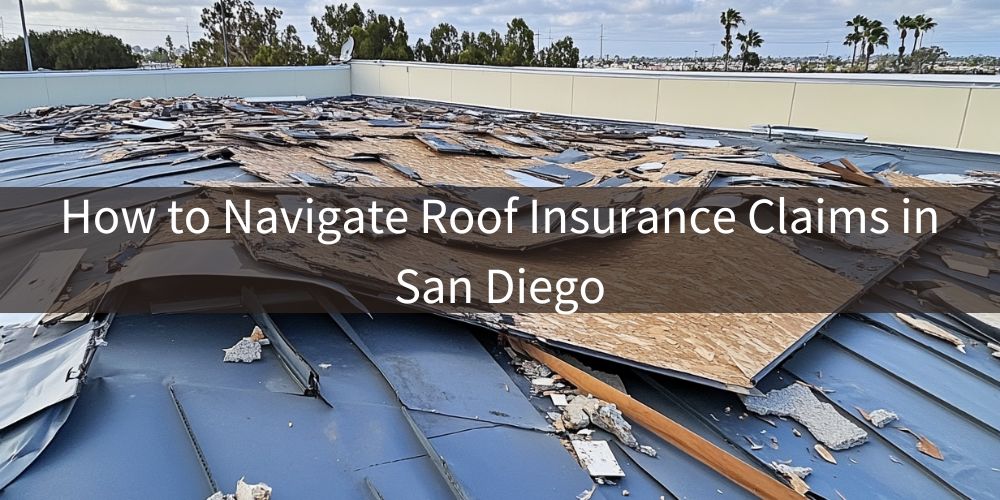
When navigating roof insurance claims in San Diego, promptly documenting storm damage with photos and written reports, seeking multiple repair estimates, and promptly filing your claim can streamline the process and increase the likelihood of a successful outcome. San Diego's coastal climate, with its moderate temperatures and occasional heavy rain, necessitates thorough inspections after major storm events or periods of prolonged moisture to assess potential roof damage. Engaging a trusted local contractor experienced in San Diego’s specific roofing challenges can aid in providing accurate assessments and estimates, strengthening your insurance claim through detailed documentation.
For San Diego property owners and facility managers, effectively managing roof insurance claims is essential to minimize repair costs and protect building assets. In this blog, we’ll provide a comprehensive guide on navigating roof insurance claims, exploring steps to secure fair settlements and highlighting best practices for maintaining the integrity of your roofing system in San Diego’s distinctive environment.
What Are the Basic Steps in Filing a Commercial Roof Insurance Claim?
Filing a commercial roof insurance claim typically involves documenting damage, contacting your insurer, and negotiating settlements. This process ensures that you receive appropriate compensation for damages covered under your policy and minimize financial losses due to roof repairs or replacements. By understanding the basic steps, you can streamline the process and get needed repairs underway swiftly. To effectively file a commercial roof insurance claim, consider the following ordered steps:
- Assess Damage: Inspect and document any commercial roof damage comprehensively.
- Immediate Mitigation: Implement temporary fixes to prevent further deterioration or water intrusion.
- Contact Insurer: Notify your insurance provider promptly to initiate the claims process.
- Professional Assessment: Hire a certified roofing contractor to evaluate and report the damage.
- Claim Negotiation: Work with your insurer and contractor to agree on repair costs and coverage.
1. Assess Damage: Inspect and document any commercial roof damage comprehensively.
Assessing damage on a commercial roof requires a methodical approach to fully capture the extent and nature of the problem. Begin with a visual inspection across the entire roofing system. You should pay close attention to flashing, seams, drainage areas, and HVAC penetration points, which are common failure zones. Identify any signs of water infiltration, blistering, membrane separation, corrosion, or physical punctures caused by debris or weather. Use high-resolution photography and detailed annotations for each identified issue. Where possible, engage a professional roofing contractor to perform a formal inspection and provide a written report. This professional assessment not only improves the accuracy of your insurance claim but also adds credibility during adjuster evaluations or dispute resolution. Accurate documentation is critical in commercial settings where damage can affect tenants, assets, or operational continuity.
2. Immediate Mitigation: Implement temporary fixes to prevent further deterioration or water intrusion.
Once damage is identified, immediate mitigation is necessary to prevent escalation. In commercial roofing, this step is both a legal and financial safeguard. Use durable tarps, sealants, or temporary patches to cover exposed sections of the roof—particularly around leaks, open seams, or dislodged materials. If possible, divert water away from vulnerable areas using temporary drainage solutions. Insurers expect policyholders to take "reasonable steps" to mitigate loss after discovering damage. Failure to act promptly could be considered negligence, potentially reducing or voiding coverage. Keep a record of all temporary repairs and materials used, and save receipts for labor or equipment, as these may be reimbursable under many commercial policies.
3. Contact Insurer: Notify your insurance provider promptly to initiate the claims process.
Notifying your insurance provider as soon as possible is essential for a smooth claims experience. When dealing with commercial properties, delays in filing can complicate the claim, especially if secondary damage occurs after the initial incident. Contact your agent or claims department and provide an overview of the incident, including the date, time, and suspected cause of damage. Submit any documentation you’ve gathered this includes; photos, contractor reports, and receipts for temporary repairs. This is to establish an official record. This early engagement allows the insurer to dispatch an adjuster faster and gives you a head start on preparing for any questions or policy clarifications. In complex commercial claims, especially those involving tenants or business interruption, early communication also ensures that supplementary coverage (such as loss of use or contents damage) is properly reviewed.
4. Professional Assessment: Hire a certified roofing contractor to evaluate and report the damage.
A professional assessment is a critical step in establishing the credibility and accuracy of your commercial roofing insurance claim. Certified commercial roofing contractors have the tools, expertise, and industry-recognized training to identify not only surface-level damage but also hidden issues that could worsen over time, such as compromised insulation, structural fatigue, or membrane deterioration. Their evaluation includes a written report with condition-specific terminology, photographs, and itemized repair recommendations. Most insurance adjusters rely on these reports as an objective basis for validating claims. In commercial scenarios, where the scale and complexity of roofing systems are higher, a licensed contractor's input can be the difference between partial reimbursement and full restoration coverage. Make sure the contractor is licensed, insured, and experienced in handling insurance-related evaluations for commercial properties.
5. Claim Negotiation: Work with your insurer and contractor to agree on repair costs and coverage.
Claim negotiation is a collaborative process that requires careful alignment between your contractor’s repair scope and the insurance company’s approved claim amount. Begin by reviewing the contractor’s detailed estimate to ensure it reflects current commercial roofing material prices, labor, code compliance upgrades, and any necessary structural work. Share this estimate directly with the adjuster and be prepared to justify each line item. This is especially important if specialized materials or complex installations are involved. Commercial roofing often includes multiple components such as HVAC curbs, rooftop walk pads, or integrated drainage systems, all of which need to be accurately included in the claim. A trusted contractor can assist in clarifying these technical details to the insurer and advocate for full coverage based on the actual repair requirements. By maintaining transparency and open communication with all parties, you improve the chances of a fair settlement that reflects both the extent of the damage and the cost of restoring the roof to full function.
Have a question about an upcoming project?
How Can You Ensure a Thorough Roof Inspection for Your Insurance Claim?
Hire a qualified roofing inspector who documents all findings meticulously to maximize your insurance claim. Conducting a thorough roof inspection is crucial for substantiating an insurance claim and ensuring you receive adequate compensation. Here are essential steps to guarantee a comprehensive evaluation of your roof’s condition for your insurance claim:
- Hire a Certified Roofing Inspector: Ensure expertise in identifying damage.
- Document Damage: Take detailed photographs and notes of affected areas.
- Inspect After Severe Weather: Focus on damage caused by storms or high winds.
- Review Historical Maintenance Records: Present a record of past inspections and repairs.
- Request a Detailed Report: Obtain an official document for your insurance company.
1. Hire a Certified Roofing Inspector: Ensure expertise in identifying damage.
Certified roofing inspectors have the necessary training and qualifications to accurately assess roof conditions. A trained professional can identify subtle damages, which may be missed by the untrained eye, ensuring you have complete information about your roof's state. Hiring a certified inspector not only lends credibility to your claim but also provides a comprehensive assessment essential for the insurance process, potentially increasing the claim amount by uncovering all damage.
2. Document Damage: Take detailed photographs and notes of affected areas.
Thorough documentation includes photographic evidence and descriptive notes of all identified damage. Pictures and notes provide objective proof that supports your claim, showing both the extent and nature of the damage. Detailed documentation can make a significant difference in the settlement offer from your insurer, ensuring that no damage is overlooked or undervalued during the claim process.
3. Inspect After Severe Weather: Focus on damage caused by storms or high winds.
Inspections should be conducted promptly after events like storms, which can cause significant roof damage. Storms and high winds are primary contributors to serious roof damage, necessitating a focused inspection immediately afterward to identify newly inflicted issues. Recognizing damage promptly can prevent further deterioration and provides timely evidence for your insurance claim, which can expedite the claim processing and settlement.
4. Review Historical Maintenance Records: Present a record of past inspections and repairs.
Keeping an organized record of previous maintenance and inspections highlights proactive care for the roof. Providing a maintenance history to your insurer shows that the roof has been consistently cared for, strengthening the authenticity of your claim. Such records can justify repair costs and demonstrate that any new damage is not due to neglect, thereby enhancing your claim's legitimacy.
5. Request a Detailed Report: Obtain an official document for your insurance company.
An official inspection report formalizes the findings, providing a structured document for the insurance company. Having a report prepared by a certified inspector formalizes your documentation, clarifying the extent of the damage in an authoritative manner. This report serves as a critical piece of evidence, presenting a professional evaluation that can be more persuasive in insurance deliberations, potentially leading to a more favorable settlement.
What Common Challenges Might You Face During the Claims Process and How Can You Overcome Them?
Common challenges during the claims process include documentation errors and delays, which can hinder claim approval. Proper preparation and communication can significantly mitigate these challenges, allowing for a smoother process. Understanding the steps involved and having the necessary information ready can help streamline the process for building owners and managers.
To effectively overcome these challenges, consider the following key steps:
- Accurate Documentation: Ensure that all details and photographs are precise and comprehensive.
- Timely Reporting: Submit claims promptly to avoid unnecessary delays.
- Clear Communication: Maintain transparent contact with insurers and contractors during the process.
- Professional Assistance: Hire a public adjuster to advocate on your behalf with the insurer.
- Detailed Knowledge: Understand your policy to know coverages and exclusions thoroughly.
1. Accurate Documentation: Ensure that all details and photographs are precise and comprehensive.
Accurate documentation is critical in the claims process as it provides evidence of damage and supports your claim. Inaccurate or incomplete information can lead to claim denial or delays in processing. Ensuring that all damages are thoroughly documented with detailed descriptions and photographs is essential to validating your claim. When documenting, consider including multiple angles of damage to capture the full extent. Gathering invoices and receipts for previous repairs can also support the claim by showing regular maintenance. This process requires attention to detail but can significantly strengthen your case.
2. Timely Reporting: Submit claims promptly to avoid unnecessary delays.
Timely reporting involves notifying your insurance company of a claim as soon as possible after the damage occurs. Delays in reporting can lead to complications, such as difficulty verifying the cause or extent of damage. Immediate reporting helps prioritize your claim and expedite the overall process. Contact your insurance provider directly after ensuring safety and taking temporary measures to prevent further damage. Keep a record of all calls and correspondences as this helps track the timeline and discussions related to the claim. Swift action reflects responsibility and urgency.
3. Clear Communication: Maintain transparent contact with insurers and contractors during the process.
Clear communication involves being proactive and consistent in providing updates and responding to inquiries from your insurer. Miscommunication can lead to misunderstandings and prolonged settlement times. Keeping all parties informed ensures everyone is on the same page regarding expectations and timelines. Make sure to clarify doubts and confirm receipt of all submitted documents. Having a single point of contact for each party can also help streamline communication. This transparency builds trust and accountability, leading to a smoother claims process.
4. Professional Assistance: Hire a public adjuster to advocate on your behalf with the insurer.
Professional assistance through a public adjuster helps navigate complex claims processes, especially those involving extensive damage. A public adjuster acts as your representative, working to ensure you receive the maximum settlement based on your policy. Their expertise is valuable in interpreting policy language and negotiating with insurers. Public adjusters assess damages, prepare comprehensive claims, and handle negotiations, freeing you to focus on other responsibilities. While they charge a fee or percentage of the claim, their assistance can sometimes result in higher settlements. Hiring an experienced and reputable adjuster is key in maximizing efficiency and benefits.
5. Detailed Knowledge: Understand your policy to know coverages and exclusions thoroughly.
Detailed knowledge of your insurance policy is foundational to anticipating potential challenges in the claims process. Not all policies cover the same events, and exclusions can lead to unexpected out-of-pocket costs. Understanding the scope and limitations of your coverage helps set realistic expectations and guides proactive measures in claims preparation. Review your policy regularly and discuss unclear terms with your agent to ensure clarity. In cases of discrepancy, understanding your rights and options can help challenge insufficient settlements. A comprehensive grasp prevents surprises and aligns your preparations with your specific coverage.
Navigating the roof insurance claim process in San Diego can be a complex task, but understanding the steps involved and working with experienced professionals can greatly simplify it. By being proactive and well-prepared, you can ensure a smoother experience when dealing with potential roof damages. From the initial claim to the final repair, each step is crucial in safeguarding your commercial property against future risks. Whether you're dealing with storm damage or any other roofing issue, having a clear understanding of the roof insurance claim San Diego process will empower you to make informed decisions and better protect your investment.
If you need assistance with your commercial roof claim process or want expert guidance on handling roof insurance claims in San Diego, please reach out to us. Use our contact form to get in touch, and our dedicated team at Commercial Roofing San Diego will be happy to provide the support and solutions you need. Explore more about these topics by contacting us today!