
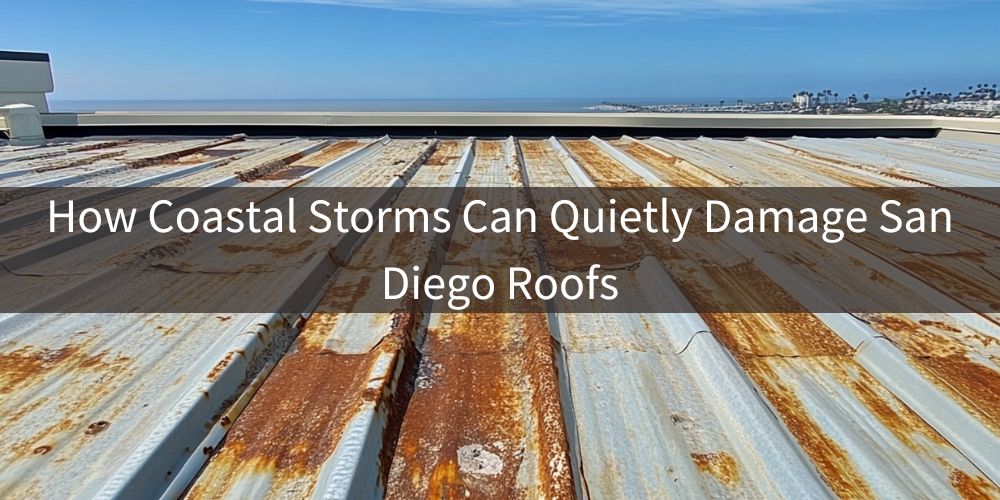
Coastal storms in San Diego can subtly damage roofs by causing saltwater corrosion and wind-driven debris impacts, leading to leaks and structural vulnerabilities over time. The coastal climate in San Diego, characterized by its salty air and powerful winds, can accelerate the deterioration of roofing materials, especially metal components. It's essential for commercial building owners to conduct regular inspections and maintenance to identify and address such wear and tear early, preventing further damage and costly repairs.
For commercial property managers and business owners in San Diego, understanding the hidden impact of coastal storms on their roofs is crucial for maintaining the integrity and longevity of their roofing systems. In this blog, we will delve deeper into the specific threats posed by coastal storms, discuss the signs of subtle roof damage, and offer expert strategies to protect commercial roofs in San Diego's unique coastal environment.
What Factors Make San Diego Roofs Vulnerable to Coastal Storms?
San Diego roofs are vulnerable to coastal storms due to their exposure to high winds, salt air, and varying temperatures. These conditions can lead to structural damage, corrosion, and reduced lifespan of roofing materials. Understanding these vulnerabilities helps in selecting appropriate materials and construction techniques to mitigate storm impact. Below are the key factors contributing to the vulnerability of San Diego roofs to coastal storms:
- Sustained High Winds: Leads to physical damage to commercial roofing assemblies.
- Salt Air Corrosion: Deteriorates building materials over time, reducing durability.
- Temperature Fluctuations: Causes expansion and contraction, damaging roofing materials.
- Intense Rainfall: Increases risk of leaks and water infiltration issues.
- UV Exposure: Degrades roofing materials, leading to faster wear and tear.
1. Sustained High Winds: Leads To Physical Damage To Commercial Roofing Assemblies
Sustained high winds during San Diego’s coastal storms exert uplift pressure that can severely compromise low-slope and flat commercial roofing systems. These winds can peel back membrane edges, loosen mechanical fasteners, damage rooftop equipment, and tear away flashing or edge metal. Flat roofs, especially those with large surface areas, are particularly susceptible to pressure imbalances and wind vortex effects near corners and parapets. If not securely installed, components like TPO, PVC, and built-up roofing membranes may experience seam failure or delamination. To minimize these risks, commercial buildings should be outfitted with FM Global-rated assemblies, perimeter reinforcement systems, and ANSI/SPRI ES-1-compliant edge details. Proper fastener spacing, high-wind adhesives, and mechanically attached or fully adhered membrane systems help ensure the roofing stays intact. Regular inspections of parapets, coping caps, and rooftop accessories are essential, especially after high-wind events, to confirm ongoing resilience against wind-induced damage.
2. Salt Air Corrosion: Deteriorates building materials over time, reducing durability
Salt-laden air is a persistent and corrosive force in San Diego’s coastal environment. When airborne chlorides settle on roofing materials they initiate electrochemical reactions that degrade protective layers and weaken structural integrity over time. This is particularly true with metal components like fasteners, flashing, and mechanical supports. Corrosion accelerates in areas with poor drainage or high humidity retention, making regular maintenance essential. Commercial roofing systems benefit from marine-grade aluminum, stainless steel fasteners, and protective finishes such as PVDF (polyvinylidene fluoride) coatings. These materials resist pitting, oxidation, and flaking, ensuring longevity even in ocean-adjacent zones. For long-term protection, roof assemblies should incorporate isolation membranes that separate reactive materials and prevent galvanic corrosion.
3. Temperature Fluctuations: Causes expansion and contraction, damaging roofing materials
Though San Diego has a moderate climate, temperature swings can cause daily thermal cycling on commercial rooftops. This is especially true after coastal storms. This expansion and contraction cycle stresses roofing membranes, seams, and joints, potentially leading to cracks, warped panels, or compromised adhesion. Over time, these micro-failures create entry points for moisture and accelerate deterioration. Materials like TPO and EPDM are engineered with elasticity to handle thermal movement, while metal roofs may require slotted fasteners or expansion joints to accommodate movement without distortion. In climates where day-night temperature deltas regularly exceed 25°F, incorporating thermally stable insulation and flexible adhesive systems is key to preserving roof performance.
4. Intense Rainfall: Increases risk of leaks and water infiltration issues
When San Diego experiences coastal storm events, rainfall can exceed the drainage capacity of older or poorly maintained commercial roofs. Flat or low-slope roofs are especially prone to ponding water, which increases the likelihood of seam failures, membrane saturation, or internal leakage. Water intrusion compromises not only the roof assembly but also HVAC systems, insulation, and interior finishes. Commercial roofs must be designed with integrated drainage strategies, including tapered insulation, overflow scuppers, and sealed penetrations. Routine inspections before and after storm seasons ensure that downspouts are clear, waterproofing layers are intact, and flashings are secure. Using moisture-resistant underlayments and redundant waterproofing layers further protects the building envelope from unexpected downpours.
5. UV Exposure: Degrades roofing materials, leading to faster wear and tear
San Diego receives over 260 days of sunshine annually, subjecting commercial roofing systems to constant ultraviolet radiation. UV exposure breaks down chemical polymers in roofing membranes, leading to surface chalking, brittleness, and eventual cracking. The effect of UV exposure can be severe on older built-up roofs or untreated asphalt systems. The effect is compounded after a storm, as materials already stressed by wind or water are more vulnerable to sun damage. To counter this, commercial property owners should consider UV-reflective membranes such as white TPO, cool roof coatings, or elastomeric silicone systems, which maintain surface integrity while reducing thermal gain. These materials not only prolong the functional lifespan of the roof but also support energy efficiency initiatives by minimizing solar absorption.
Have a question about an upcoming project?
How Can You Identify Signs of Storm Damage on Commercial Roofs?
Storm damage on commercial roofs often begins subtly but can escalate into major structural or operational failures if left unaddressed. Signs may include water intrusion, membrane separation, ponding, or deformation of critical components. San Diego’s coastal storms, though infrequent, can bring intense winds, salt-laden rain, and flying debris. These conditions challenge the resilience of low-slope and flat roofing systems common on commercial buildings. Routine post-storm inspections are essential to catch early-stage damage before it leads to extensive repairs or compromises tenant safety. Property managers and facility teams should be trained to recognize specific indicators of storm-related harm and initiate repairs or assessments without delay.
Below are the most common signs of storm damage on commercial roofs and how you can identify them.
- Membrane Uplift or Tears: Visible displacement or punctures in roofing membranes
- Active or Latent Water Leaks: Signs of moisture penetration into the building envelope
- Ponding Water: Standing water remaining beyond 48 hours after rainfall
- Flashing Damage: Separation, warping, or detachment of metal flashings
- Equipment Base Damage: Storm-related impact around rooftop mechanical units
1. Membrane Uplift or Tears: Visible displacement or punctures in roofing membranes
Commercial roofing membranes such as TPO, EPDM, or PVC can suffer tearing, delamination, or edge lifting during high winds or flying debris impact. These openings expose insulation and decking to moisture, leading to saturation, thermal inefficiency, and structural decay. After a storm, inspect seams, flashing terminations, and perimeter zones closely, as these areas experience the highest uplift pressure. Tears or lifted seams require immediate repair using manufacturer-approved patches or full section replacements to maintain waterproofing performance.
2. Active or Latent Water Leaks: Signs of moisture penetration into the building envelope
Water leaks are one of the most damaging and common consequences of storm impact. In commercial buildings, leaks may appear as stained ceiling tiles, rusted metal deck panels, wet insulation, or pooling near electrical or HVAC units. Even small leaks can affect operations, promote mold growth, and trigger costly remediation. Tracing leak origins is complex on large-scale roofs and often requires infrared scanning or core sampling. Swift identification and repair are critical to avoid extended downtime or code violations.
3. Ponding Water: Standing water remaining beyond 48 hours after rainfall
Flat and low-slope commercial roofs must be designed to drain efficiently. Ponding water, defined by the National Roofing Contractors Association (NRCA) as water that remains after 48 hours, can indicate inadequate slope, blocked drains, or substrate deformation caused by storm impact. Persistent ponding stresses membrane seams, accelerates material aging, and may lead to roof collapse in extreme cases. Solutions may include installing tapered insulation, repairing deck deflection, or clearing drainage obstructions.
4. Flashing Damage: Separation, warping, or detachment of metal flashings
Flashing is installed at roof transitions, wall junctions, skylights, and equipment curbs to prevent water infiltration. During storms, high winds can lift or distort metal flashing, creating open seams where water can enter. Loose or bent flashing is often a hidden vulnerability that leads to long-term leaks. Pay particular attention to edge metal systems, expansion joints, and penetration flashings after a storm. Repairs should be completed using watertight sealants or new metal components in accordance with ANSI/SPRI ES-1 standards for wind uplift resistance.
5. Equipment Base Damage: Storm-related impact around rooftop mechanical units
Commercial roofs often house HVAC systems, solar arrays, exhaust fans, and satellite equipment. These components are mounted on curbs or sleepers. During coastal storms, wind-driven debris or strong gusts can shift, detach, or damage these units and their waterproofing bases. Deteriorated seals around equipment curbs are a common entry point for water. Post-storm inspections should include a review of all rooftop mechanical enclosures, with resealing or replacement performed to prevent operational disruption and interior leaks.
What Preventive Measures Can Protect Your Commercial Roof from Future Storm Damage?
Regular maintenance and inspections alongside proactive reinforcements help protect commercial roofs from storm damage. Ensuring your roof's integrity before overwhelming weather events can prevent costly damage and extend its lifespan. Strategically enhancing your roof's resilience is key to mitigating potential risks from severe weather.
Here are five crucial preventive measures to protect your commercial roof from future storm damage:
- Regular Inspections: Identify weak points and potential leaks before storms hit.
- Reinforce Flashings and Seals: Ensure all seams are watertight and secure.
- Trim Overhanging Branches: Prevent debris damage from falling branches during storms.
- Clear Gutters and Drains: Avoid water buildup that can lead to leaks or structural damage.
- Install Impact-Resistant Materials: Protect your roof with durable materials that withstand storm impacts.
1. Regular Inspections: Identify weak points and potential leaks before storms hit
Scheduled roof inspections are essential for detecting early signs of wear, material fatigue, or installation flaws. In commercial roofing systems, issues such as membrane shrinkage, seam separation, punctures, or deteriorating flashings can develop unnoticed. Professional assessments by certified roofing contractors ensure that small defects are addressed before they evolve into storm-related failures. Prioritizing inspections before the rainy season provides an opportunity to reinforce vulnerable areas, optimize drainage, and avoid disruptions to operations caused by water intrusion. Routine evaluations also support warranty compliance and extend the overall service life of the roof.
2. Reinforce Flashings and Seals: Ensure all seams are watertight and secure
Flashing and sealant integrity is critical for preventing moisture ingress at terminations, corners, expansion joints, and roof penetrations. Commercial roofs often include HVAC curbs, skylights, and parapet interfaces that depend on properly installed flashing systems to remain waterproof. Over time, these details can weaken due to UV exposure, thermal cycling, or poor workmanship. Reapplying commercial-grade sealants, mechanically securing loose flashings, and reinforcing perimeter transitions help prevent rainwater from penetrating the building envelope. Ensuring watertight seams reduces the risk of internal water damage and contributes to the overall resilience of the roof under storm conditions.
3. Trim Overhanging Branches: Prevent debris damage from falling branches during storms
Trees adjacent to commercial properties can pose a hazard when overhanging limbs extend above the roof. During high-wind events, broken branches can puncture membranes, dent sheet metal, or displace rooftop equipment. Proactive vegetation management eliminates this risk by creating clearance between foliage and the roof system. For buildings with large-scale HVAC units or solar panels, branch impact can also disrupt service and increase repair costs. Regular trimming ensures your roof remains free of tree-related debris and reduces cleanup efforts after a storm, enhancing both safety and operational efficiency.
4. Clear Gutters and Drains: Avoid water buildup that can lead to leaks or structural damage
Effective drainage is one of the most important aspects of a storm-ready commercial roof. Blocked internal drains, scuppers, or downspouts can lead to standing water, which stresses the membrane, weakens seams, and increases the risk of roof collapse. Regularly cleaning roof drains and clearing debris from gutter systems ensures water flows off the roof efficiently during San Diego’s intense rainfall events. Preventing ponding water not only maintains the roof’s structural performance but also limits the growth of algae, mold, and moisture-related deterioration of insulation and decking.
5. Install Impact-Resistant Materials: Protect your roof with durable systems built for severe weather
Commercial-grade impact-resistant materials are designed to endure wind-driven debris and physical stress during storms. Commercial buildings rely on robust systems such as reinforced TPO, multi-ply modified bitumen, PVC membranes, or ballasted roofing assemblies engineered for durability. Selecting materials rated by FM Global or UL for impact resistance provides a higher level of protection and may result in reduced insurance costs. These resilient systems maintain their structural integrity even in severe conditions, reducing the likelihood of emergency repairs and ensuring continued protection for occupants, assets, and operations.
While San Diego is known for its sunshine and coastal charm, commercial roofs in the region quietly face a variety of storm-related threats. From membrane uplift and flashing failure to ponding water and salt air corrosion, these issues often go unnoticed until significant damage has occurred. Coastal storms may not always make headlines, but their impact on roofing systems can be long-lasting and costly if left unchecked.
Proactive inspections, timely maintenance, and choosing weather-resilient materials are critical for protecting your commercial property year-round. If your building has recently experienced a storm or you suspect hidden damage, schedule a professional roof assessment. Identifying and addressing vulnerabilities early helps preserve structural integrity, reduce long-term repair costs, and ensure your roof continues to perform as intended in San Diego’s demanding coastal environment.
If you need further insights into identifying roof storm damage signs or require professional assistance with commercial storm roof repair, please do not hesitate to contact us through our contact form. Our team at Commercial Roofing San Diego is ready to help you protect your property with expert solutions tailored to your needs.